Electric Ferries: Range & Sustainability, Explained
Electric ferries can cut local pollution, energy use, and maintenance costs, but their viability depends on route length, charging infrastructure, vessel efficiency, and grid cleanliness. Candela argues hydrofoils make fast electric service practical by reducing drag and energy demand.
Electric Ferries: Range & Sustainability, Explained
Author: Yasaman Hosseini | Published: 2024-08-29 | Generated: 2025-04-29 | Domain: candela.com
Tags: ‘#electricferries’ ‘#maritimetech’ ‘#sustainability’ ‘#hydrofoils’ ‘#batterytechnology’
TLDR
Electric ferries replace diesel propulsion with batteries, reducing local exhaust, noise, mechanical complexity, and operating costs—especially on short, regularly charged routes. Their climate benefit depends on the electricity mix, while deployment remains constrained by charging capacity, grid upgrades, battery weight, and upfront investment. Candela positions hydrofoils as a way to reduce drag by lifting the hull from the water, claiming the P-12 can use over 80% less energy than non-foiling vessels while reaching 50 nautical miles at 25 knots.
Key Takeaways
- Emissions and local pollution: Electric ferries eliminate onboard exhaust emissions such as NOx, CO, soot, and diesel-related local pollutants; total greenhouse-gas reductions depend on how clean the electricity grid is. A Puget Sound electric ferry reportedly produced 25% of the exhaust of its diesel counterpart.
- Operating economics: Electric propulsion has fewer mechanically complex components and less wear, reducing maintenance needs. The article cites an all-electric catamaran with an energy unit cost 21% lower than a comparable diesel ferry, despite higher initial purchase costs.
- Range varies by vessel class: Slow small ferries commonly cover 5–30 nautical miles with 1–2 MWh batteries; medium and larger slow vessels can reach 20 to more than 100 nautical miles with 2 to more than 10 MWh capacity.
- Hydrofoil efficiency claim: The Candela P-12’s hydrofoils lift its hull above the water to reduce drag. Candela states the ferry can travel up to 50 nautical miles at 25 knots and consume over 80% less energy than non-foiling vessels.
- Adoption barriers and enablers: Ports need dependable fast charging, sufficient quay-side electrical capacity, and often grid upgrades. High initial vessel and infrastructure costs remain a barrier, with subsidies, public-private R&D partnerships, hybrid systems, and better batteries positioned as key accelerators.
- Lifecycle assessment finding: A KTH Royal Institute of Technology study cited by Candela estimates replacing Stockholm diesel ferries with the Candela P-12 could reduce environmental impact by 1,670 tonnes of CO2-equivalent annually.
Images & Media
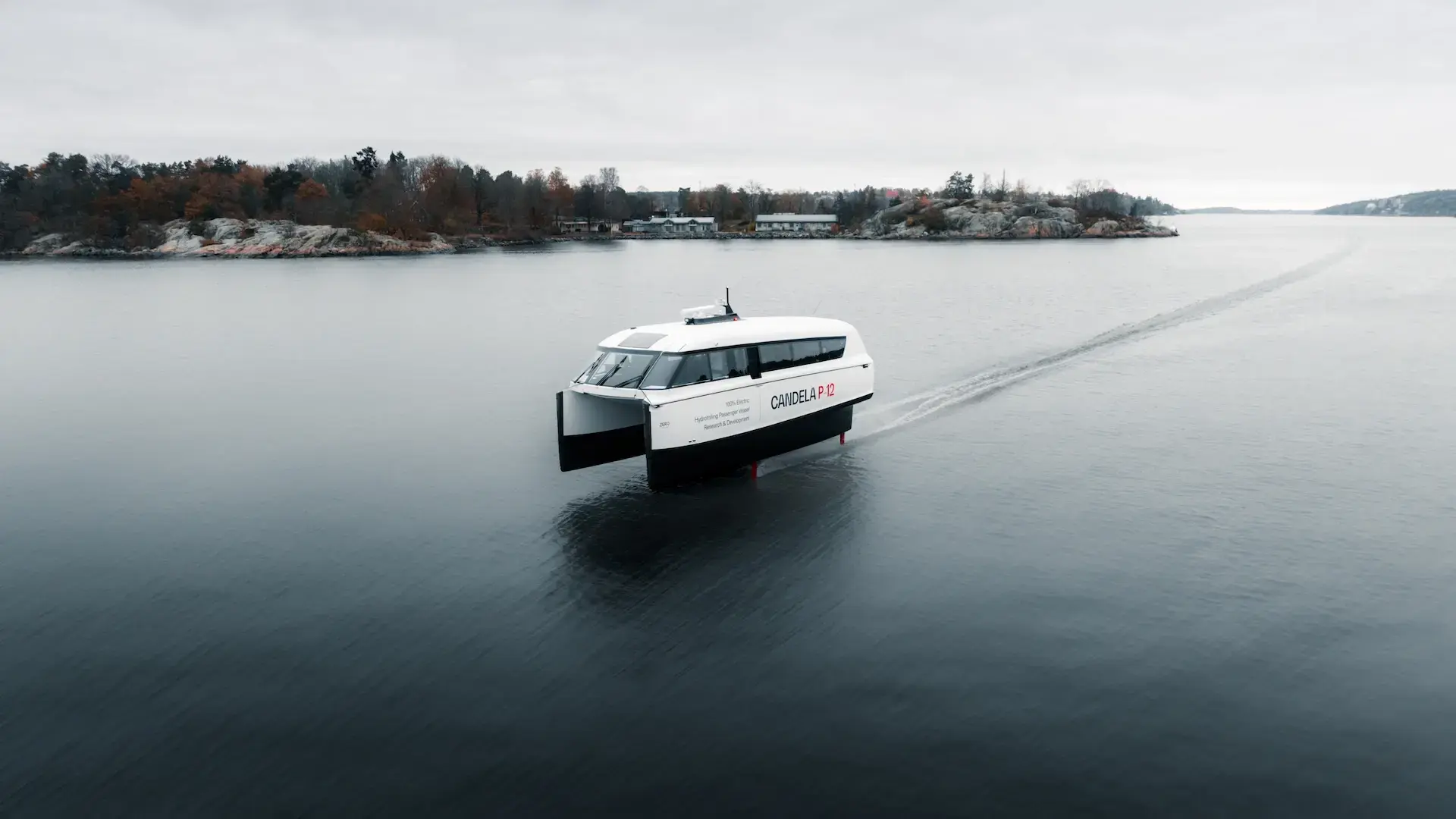
- P-12 electric ferry foiling — Hero image of Candela’s electric hydrofoil ferry underway.
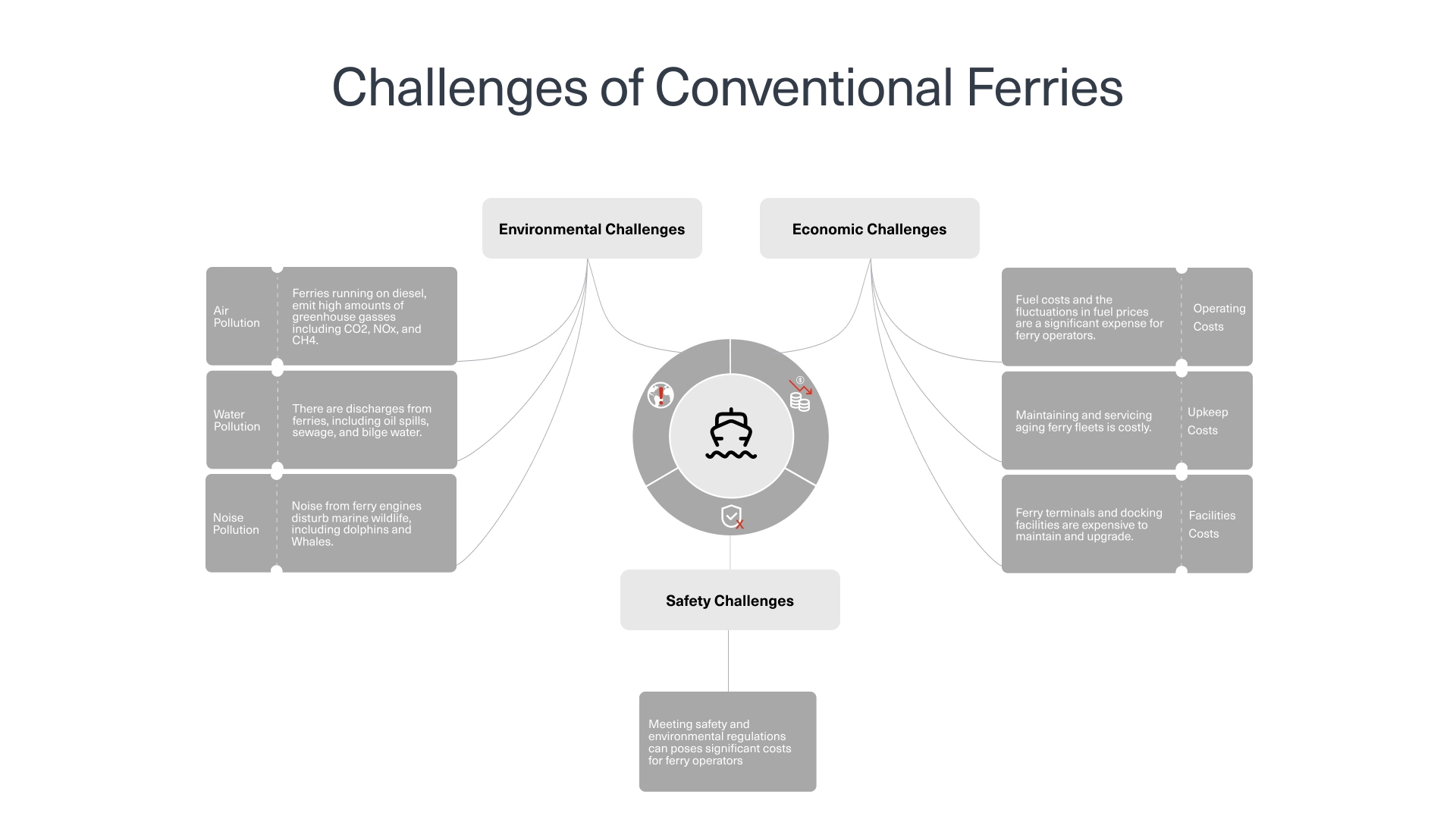
- Challenges of conventional ferries vs. electric ferries — Diagram contrasting diesel-ferry drawbacks with electric-ferry benefits.
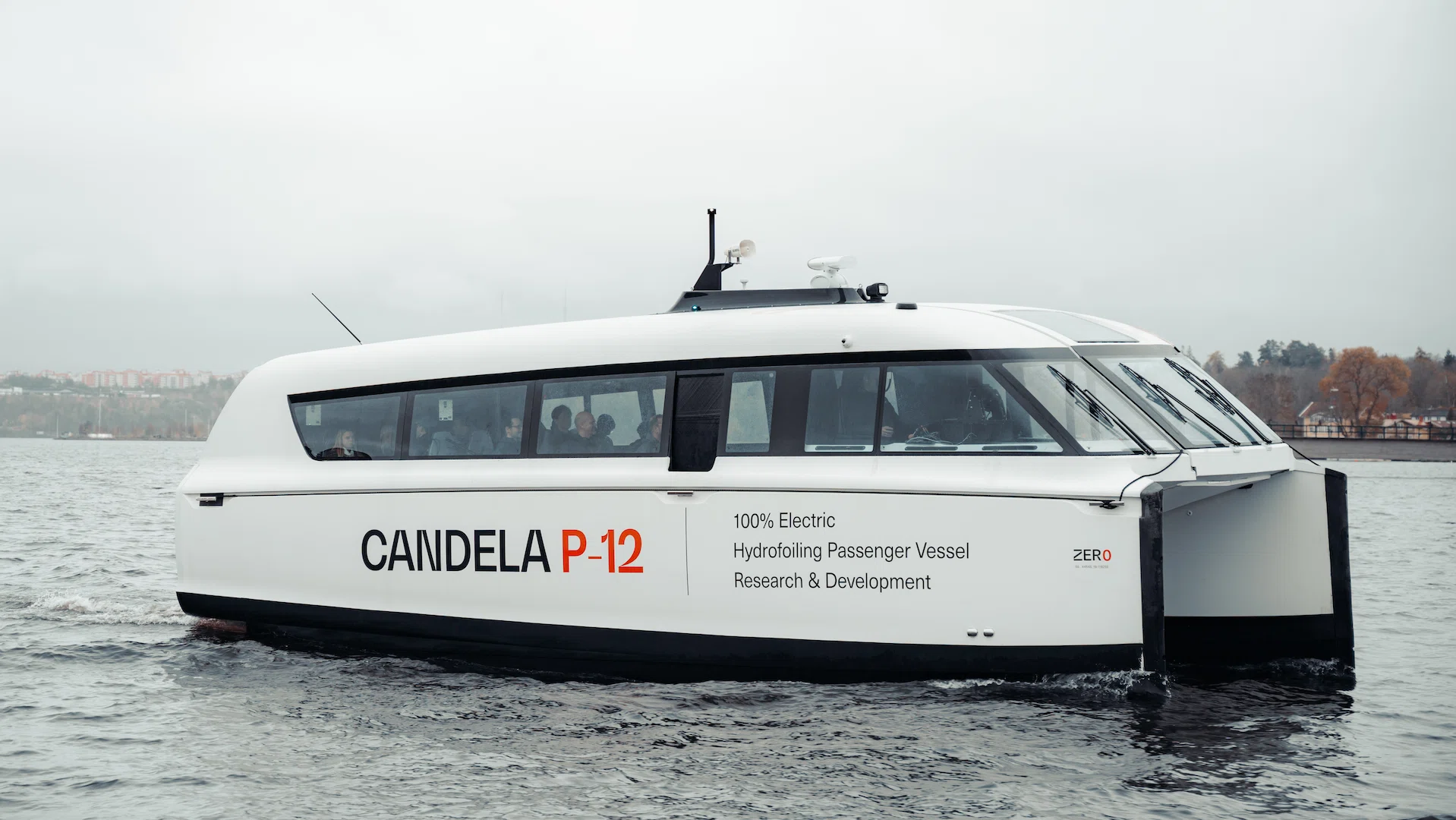
- P-12 electric passenger boat — Illustration supporting the environmental-benefits discussion.
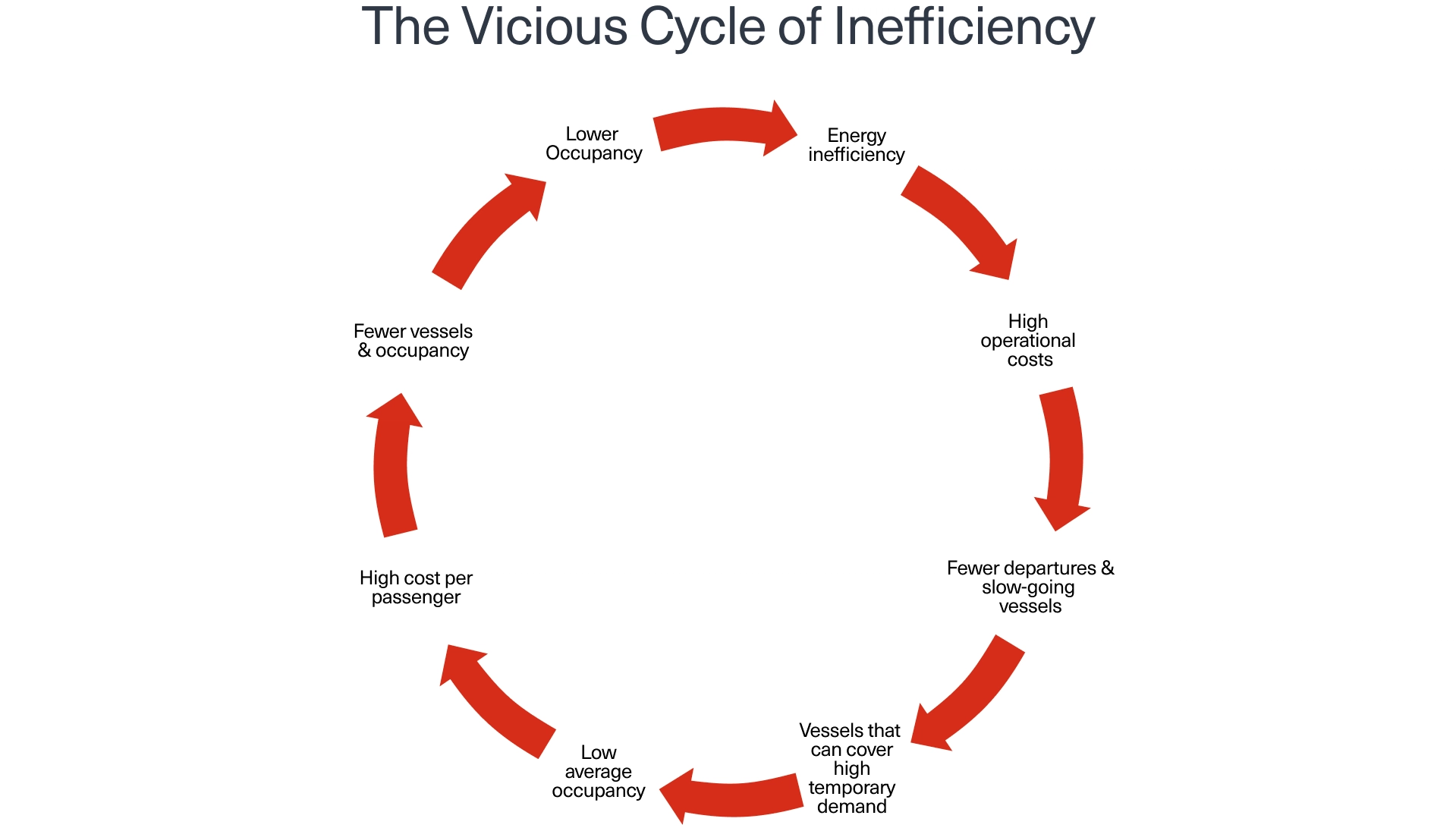
- The Vicious Cycle of Inefficiency — Diagram describing how conventional-ferry fuel and maintenance costs can undermine ridership and revenue.
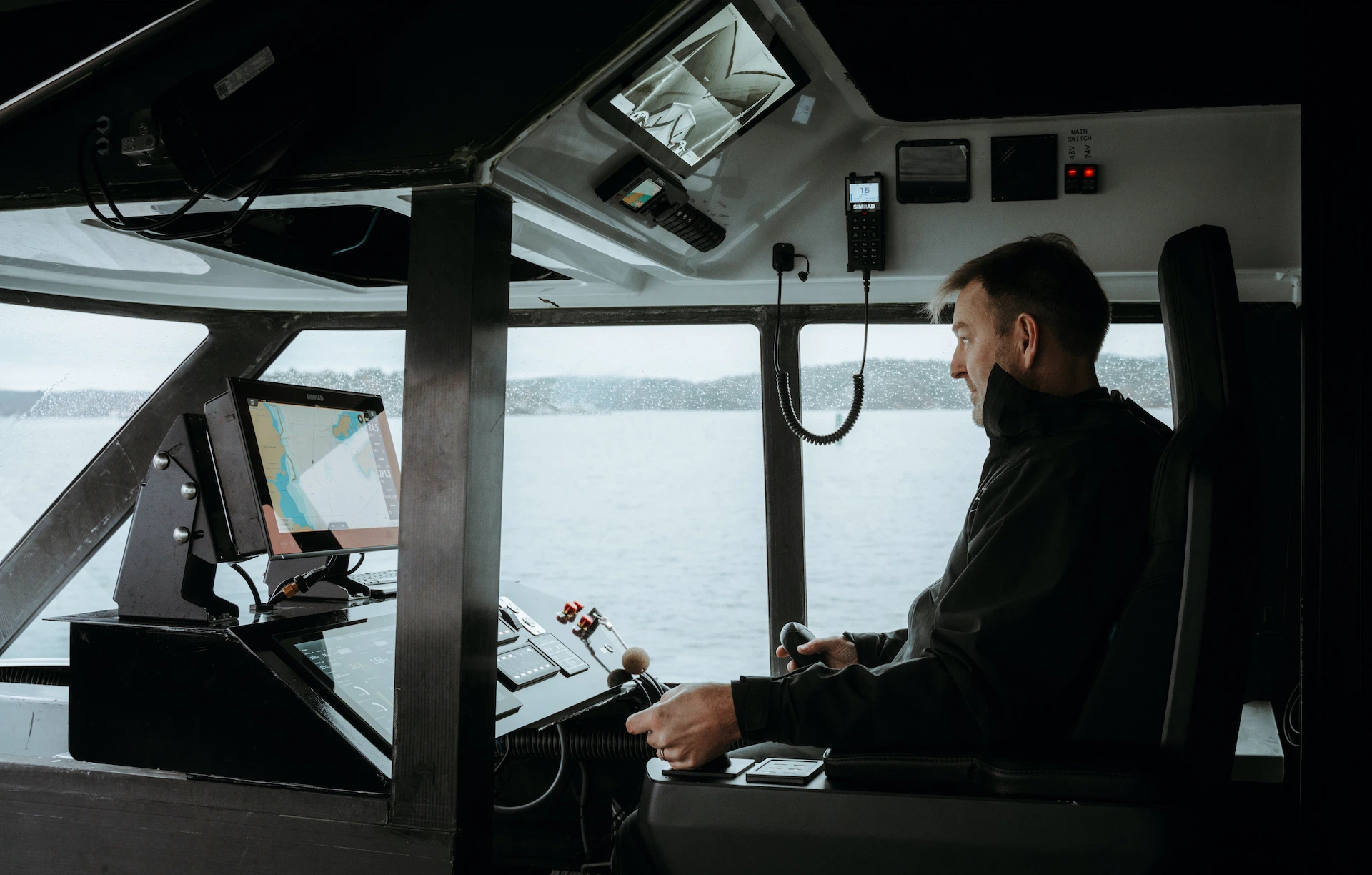
- P-12 electric passenger boat cockpit — Interior cockpit view of the P-12.
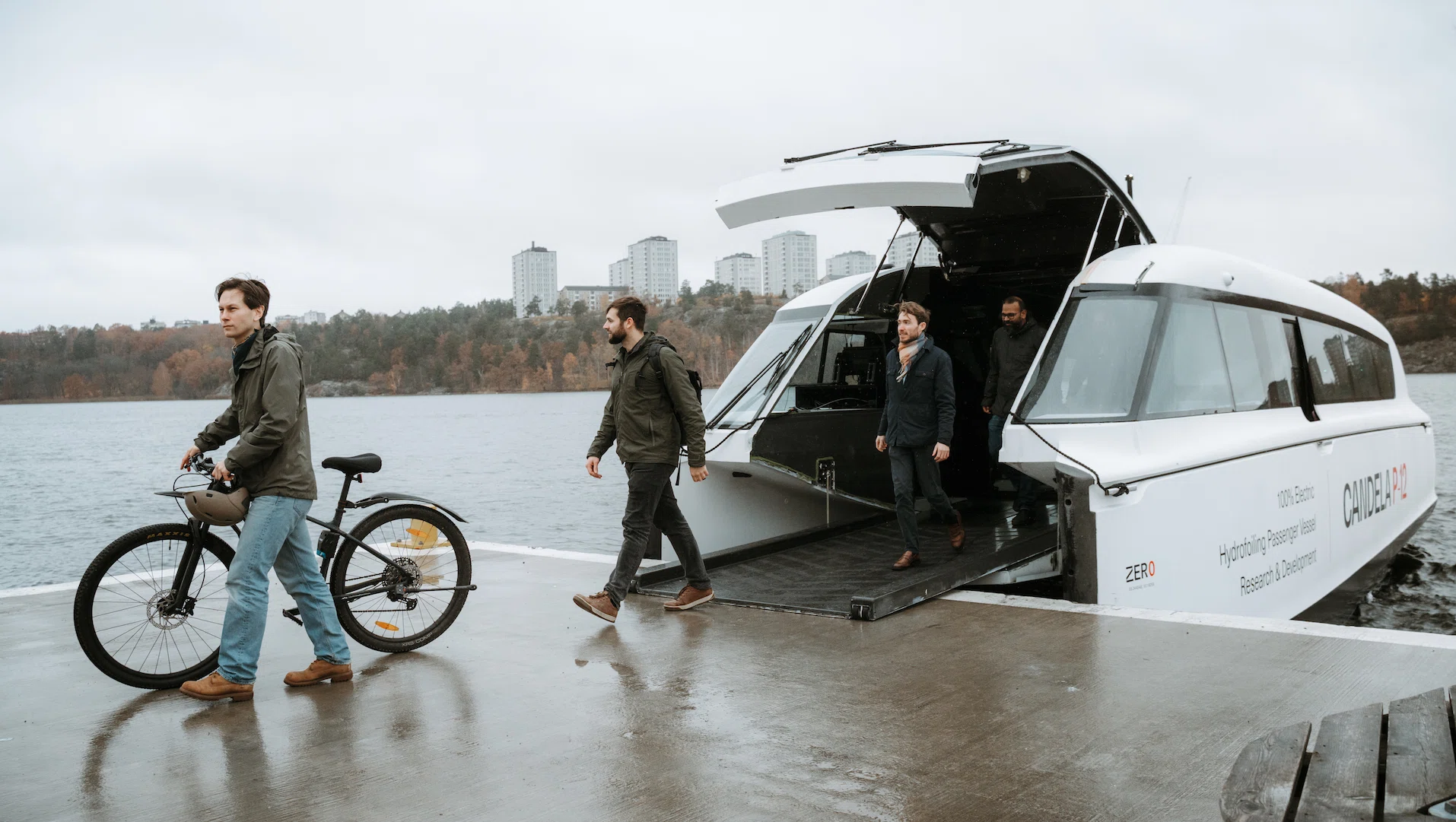
- P-12 electric passenger ferry docking — P-12 ferry arriving at or departing a dock.
Referenced Links
- Candela technology — Candela’s overview of its electric propulsion and hydrofoil technology.
- Comparative Life Cycle Assessment of Electric Hydrofoil Boats and Fossil Driven Alternatives — KTH Royal Institute of Technology study cited for lifecycle emissions and energy-demand comparisons.
- Candela P-12 Shuttle — Product page for Candela’s electric hydrofoil shuttle ferry.
- Candela P-12 Voyager — Product page for the P-12 Voyager configuration.
- Candela P-12 Business — Product page for the P-12 Business configuration.