The secrets of the Shinkansen
Japan’s world-leading rail system is not a cultural accident: private, vertically integrated railway companies build cities, capture land value, and compete with cars that pay more of their costs. Liberal zoning, disciplined privatization, and targeted regulation offer a replicable policy formula.
The secrets of the Shinkansen
Author: Matthew Bornholt and Benedict Springbett | Published: 2026-04-13 | Generated: 2026-04-14 | Domain: worksinprogress.news Tags: ‘#railways’ ‘#shinkansen’ ‘#urbanism’ ‘#transit-oriented-development’ ‘#privatization’ ‘#japan’
TLDR
Japan’s exceptional rail ridership, profitability, and service quality stem primarily from institutions rather than national culture. Private railway companies combine vertically integrated rail operations with real estate, retail, and destination businesses; liberal land-use rules let them develop dense station areas and capture the value their lines create. Japan also prices driving more directly than Western countries, privatized the inefficient national railway system into regional operators, and limits regulation largely to viable fare caps and targeted capital subsidies.
Key Takeaways
- Rail dominates Japanese travel: Rail accounts for 28% of passenger-kilometers in Japan, versus 10% in France, 6.4% in Germany, and 0.25% in the United States. JR East alone carries four times the passengers of Britain’s entire rail system despite having less track and serving roughly 10 million fewer people.
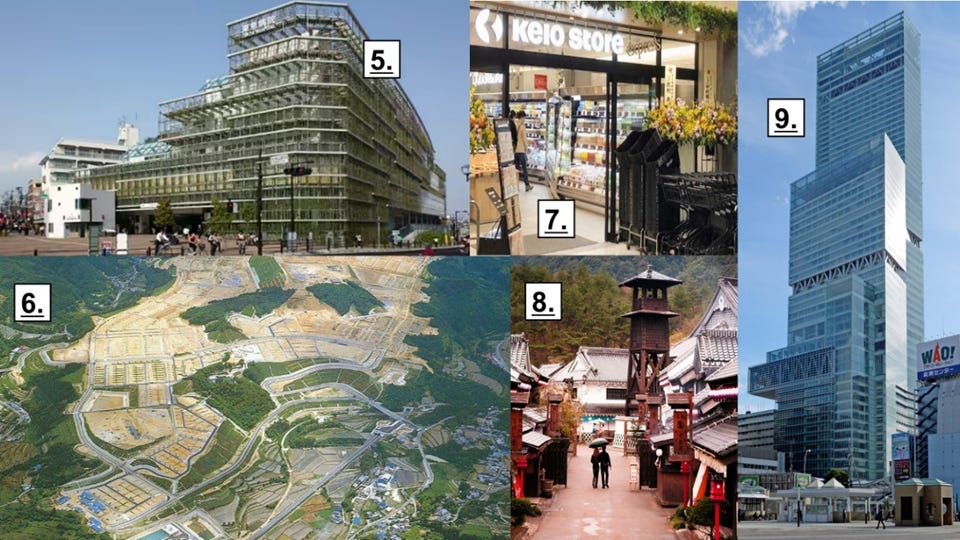
- Railways operate as city-building conglomerates: Companies such as Tokyu own trains alongside buses, housing, offices, hospitals, supermarkets, entertainment venues, and retirement homes—capturing spillover value while generating riders for their rail corridors. Core rail operations are profitable but commonly provide only a plurality or small majority of revenue.
- Development policy supports transit: Japan’s permissive national zoning and land-readjustment system enable housing, commercial development, station upgrades, and dense urban centers. Tokyu’s Den’en Toshi Line land-readjustment projects covered 3,100 hectares and grew their population from 42,000 in 1954 to more than 500,000 in 2003.
- Cars compete on less-subsidized terms: Car owners must secure private overnight parking, while public-road parking is generally prohibited and parking minimums are unnecessary. Central Tokyo has 23 parking spaces per hectare and 0.04 per job, compared with Los Angeles’s 263 and 0.52; Tokyo households spend about ¥210,000 annually on car purchase and maintenance versus ¥71,000 on public-transport fares.
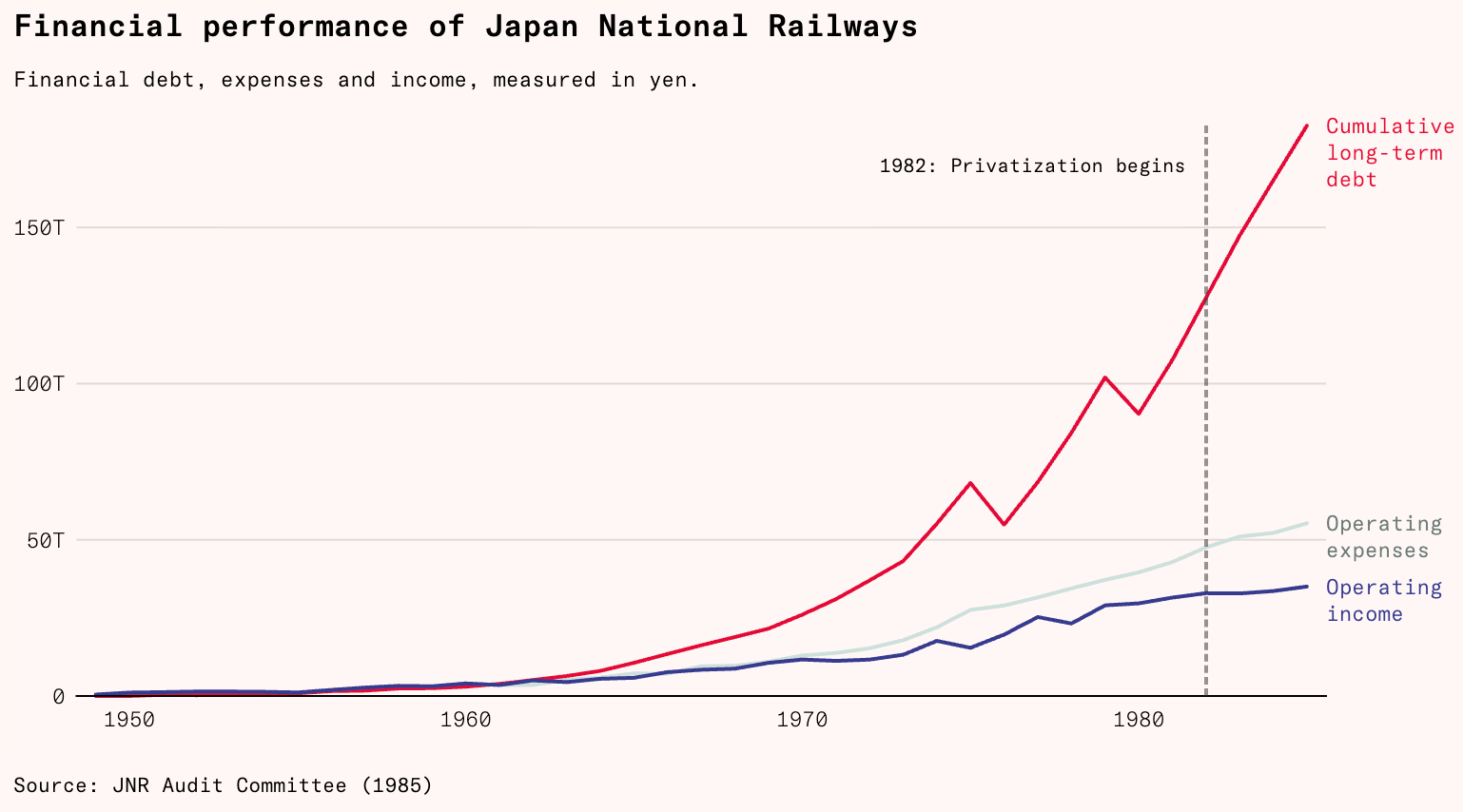
- Privatization fixed JNR’s structural failures: Before reform, labor represented 78% of Japanese National Railways’ costs versus 40% at other Japanese railways, and private-rail workers were 121% more productive. The 1982–90 reform period more than halved the workforce, closed 83 loss-making lines, transferred debt to a holding company, and enabled JR companies to adopt the broader city-builder model.
Images & Media
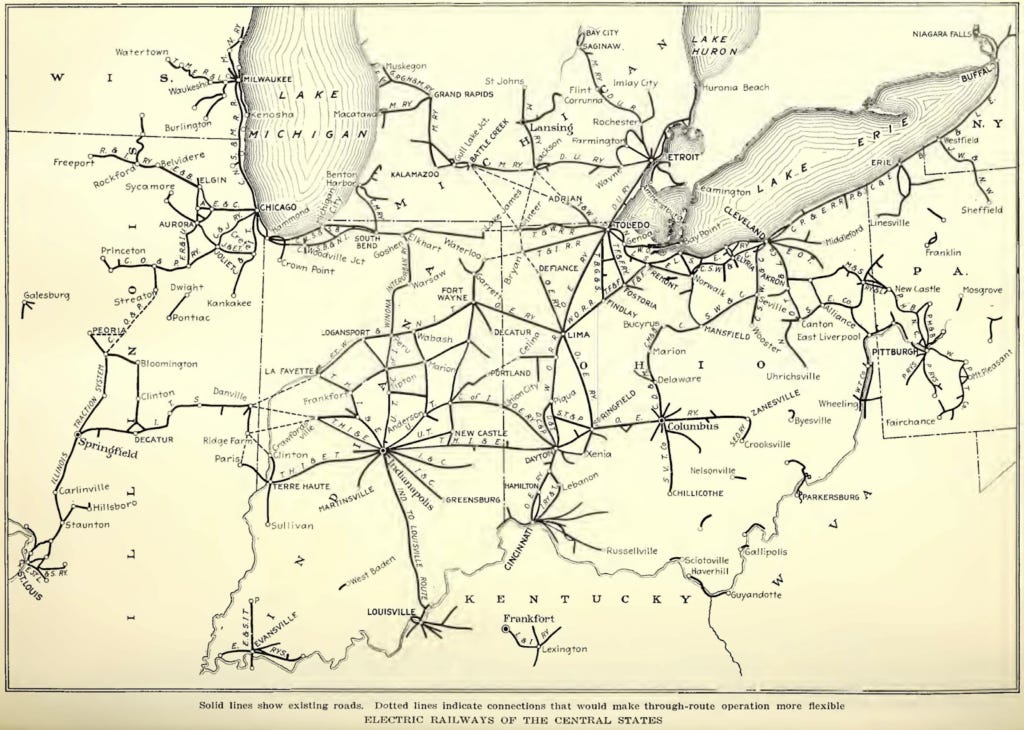
- Midwestern interurban railway network — Historical U.S. interurbans, compared with Japanese private lines that evolved into successful heavy rail.
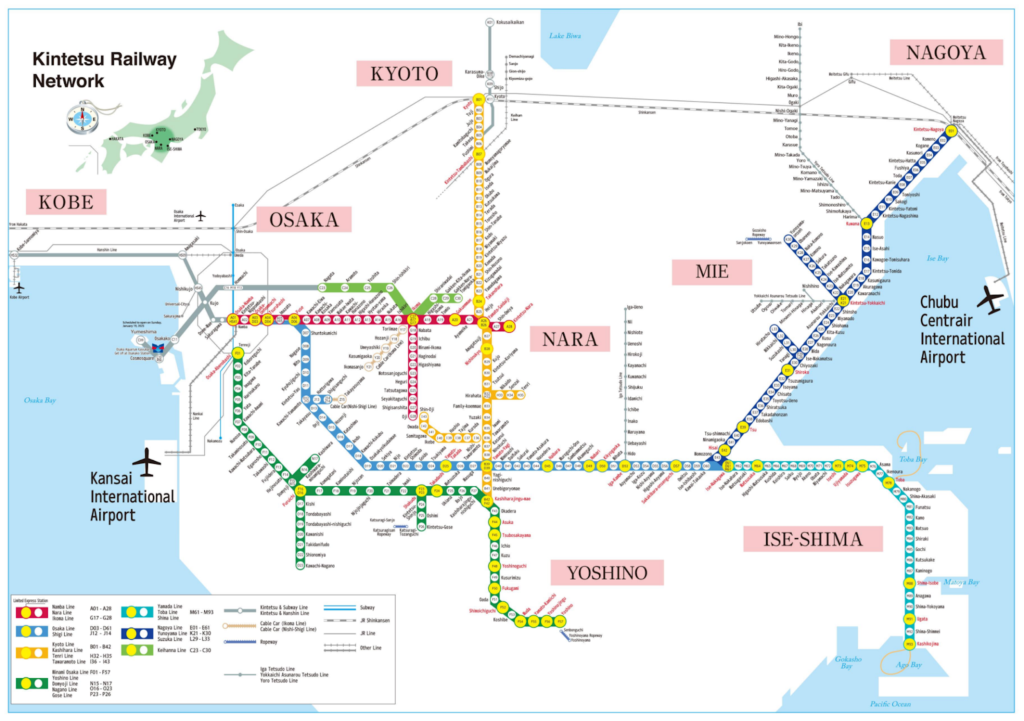
- Kintetsu Railway network — Network map of Japan’s largest legacy private railway, spanning Osaka to Nagoya.
- Legacy railway companies’ side businesses — Hotels, theaters, supermarkets, resorts, healthcare, stadiums, and station complexes operated by rail companies.
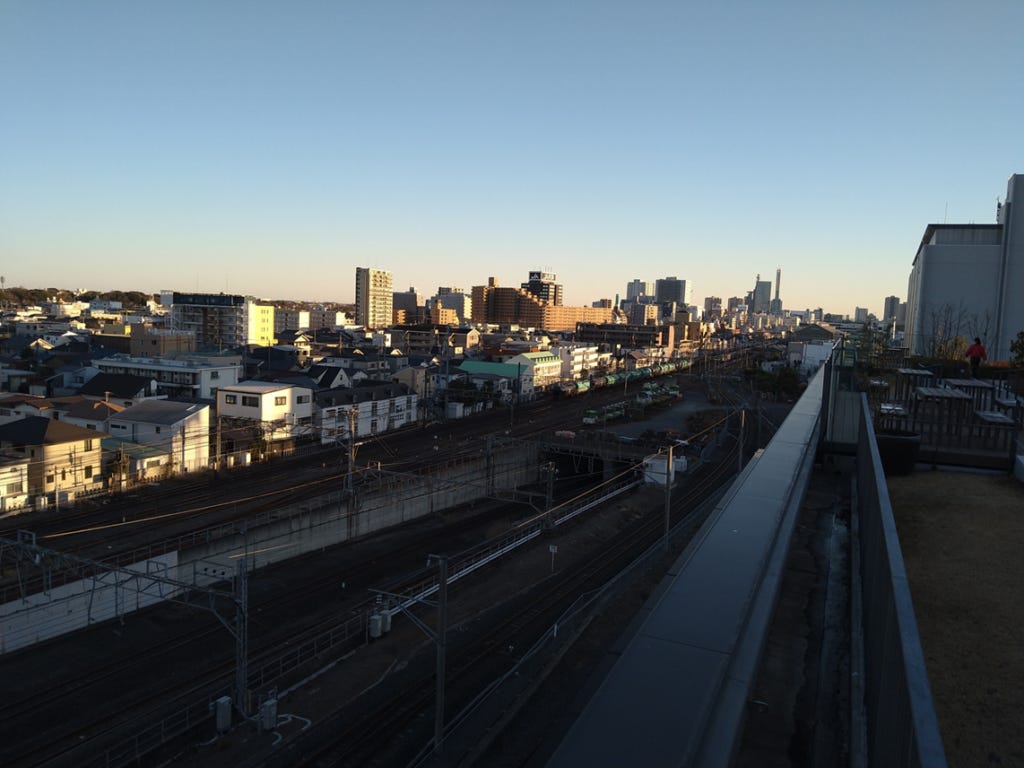
- Omiya rail corridor and station-centered density — Development intensifies from low-rise housing to apartment blocks and high-rises around a Greater Tokyo station center.
- JNR performance and privatization chart — Visual evidence accompanying the discussion of JNR’s costs, productivity, and privatization reforms.
Referenced Links
- Japan Private Railway Association — Overview of major legacy private railways and their networks.
- Tokyu Group — Example of a railway conglomerate operating transport, property, retail, healthcare, and leisure businesses.
- Land readjustment — Explanation of the planning mechanism used extensively to assemble and redevelop land in Japan.
- New York City Mobility Report, 2019 — Cited for New York’s uniquely high U.S. rail modal share.
- Japan’s proof-of-parking rule — Documentation of the requirement to demonstrate access to private parking before purchasing a car.
- Japan Railway Construction, Transport and Technology Agency — Information on capital support for rail investments such as accessibility and earthquake resilience.